July 6, 2026
What Hiring Managers Actually Think When You Negotiate Your Offer
Picture this: you get the offer, you're thrilled, and then a little voice says "should I ask for more?" Here's what was actually happening on my side of that number.
There's Room in That Offer: Just Not as Much as You Think
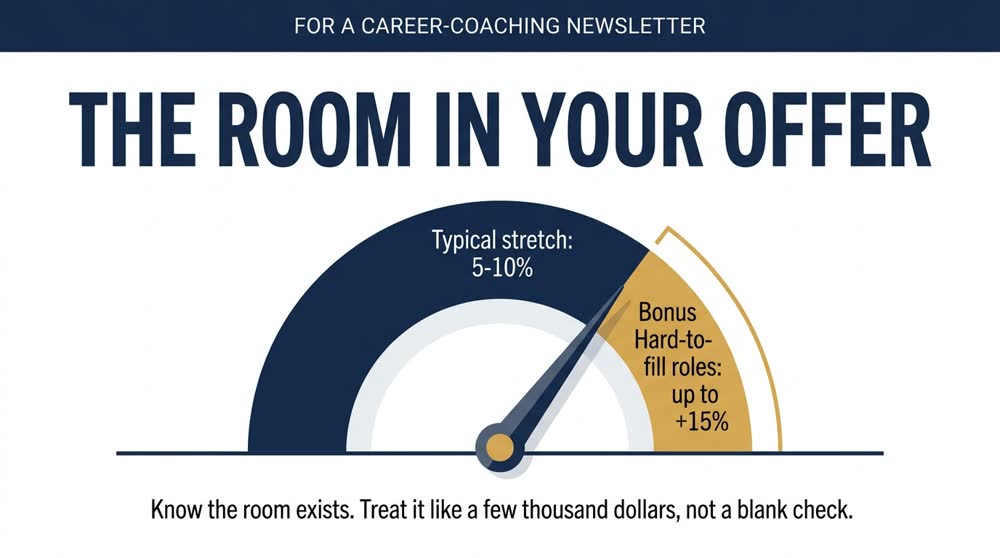
Every offer I sent out had a little bit of stretch built into it, usually 5 to 10 dollars out of every 100 in the budget, not the full range candidates imagine. For roles that were hard to fill (AI, cybersecurity, specialized engineering), I sometimes had another 5 to 15 dollars of flexibility if a candidate made a strong case. But the days of "just ask, we'll find the money" are mostly over. Budgets are tighter, and pay bands are watched more closely than they used to be.
The honest version: I could almost always move a little. I could rarely blow past the top of my range without a real justification: a rare skill, a competing offer, or a clear case for the business impact you'd bring. Know that the room exists, but treat it like a few thousand dollars of flexibility, not a blank check.
The Three Moves That Make a Hiring Manager Quietly Pull Back
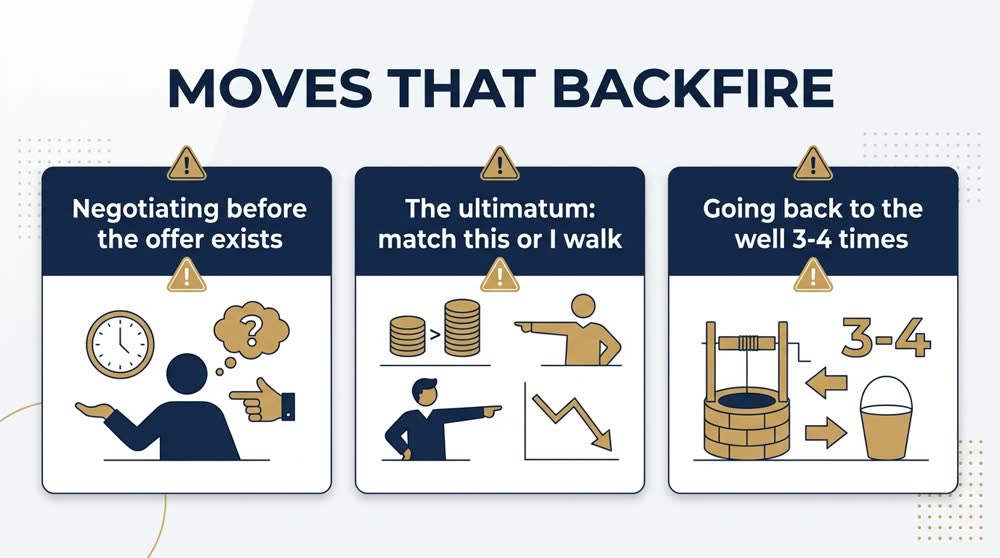
Not every negotiation move backfires, but a few specific ones make hiring managers stop trying to help you, even when they wanted to.
The first is negotiating before there's even an offer on the table: bringing up salary demands in an early interview instead of waiting for the written offer. It reads as jumping the gun, and it puts the manager on the defensive before they've even decided to hire you.
The second is the ultimatum: "match this number or I walk." Hiring managers read that as a preview of what you'll be like to manage, and most respond by tightening up, not loosening up. The third is going back to the well three or four times. One thoughtful counter, maybe two, is completely normal and expected. A fourth round signals poor judgment more than it signals leverage.
There's a quieter one too: comparing your ask to what a coworker makes. It's understandable (you're trying to make your case), but it puts the hiring manager in an impossible spot around pay confidentiality, and it usually ends the conversation rather than moving it forward.
Ask After the Offer, Not Before, and Ask for More Than Just the Number
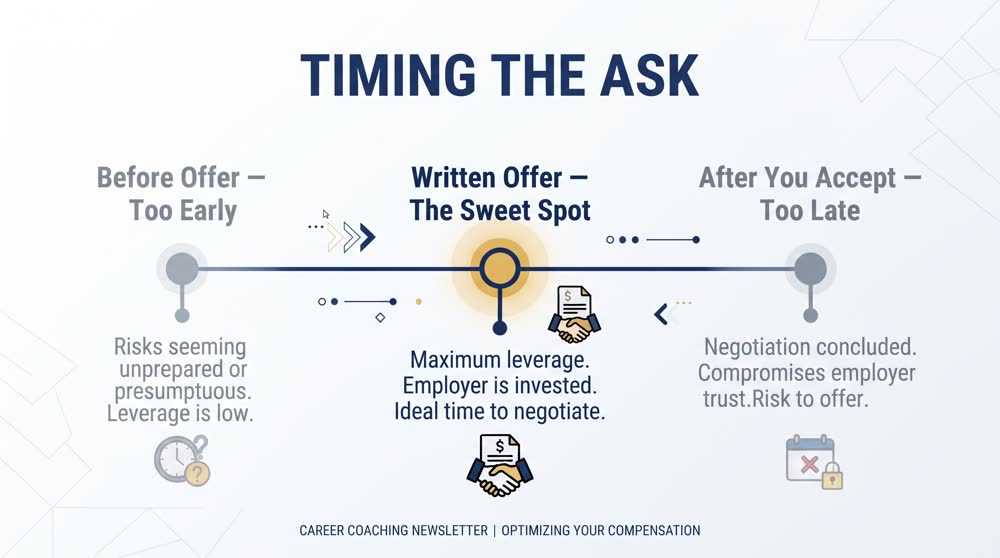
Timing matters more than most candidates realize. The window that actually works is narrow: after you have a written offer, before you accept it. That's the moment a hiring manager has already decided they want you and has a real reason to go fight for more on your behalf. Bringing it up earlier just makes you look transactional; waiting until after you've accepted means the conversation is basically over.
When you do ask, lead with why, not just what. "Based on what similar roles are paying and the experience I'd bring, I was hoping we could look at something closer to X" lands very differently than silence followed by a number. Candidates who anchor their ask in real market data are meaningfully more likely to get a better offer than those who just push on gut feel.
And if the base salary genuinely can't move (sometimes it can't, because of internal pay equity rules), that's not the end of the conversation. Ask about a signing bonus, extra PTO, a remote-work allowance, or better yet, an accelerated performance review at 6 months tied to a clear raise if you hit your goals. Those levers often move even when the base number is locked.
Most People Never Even Ask. Here's What That Costs Them.
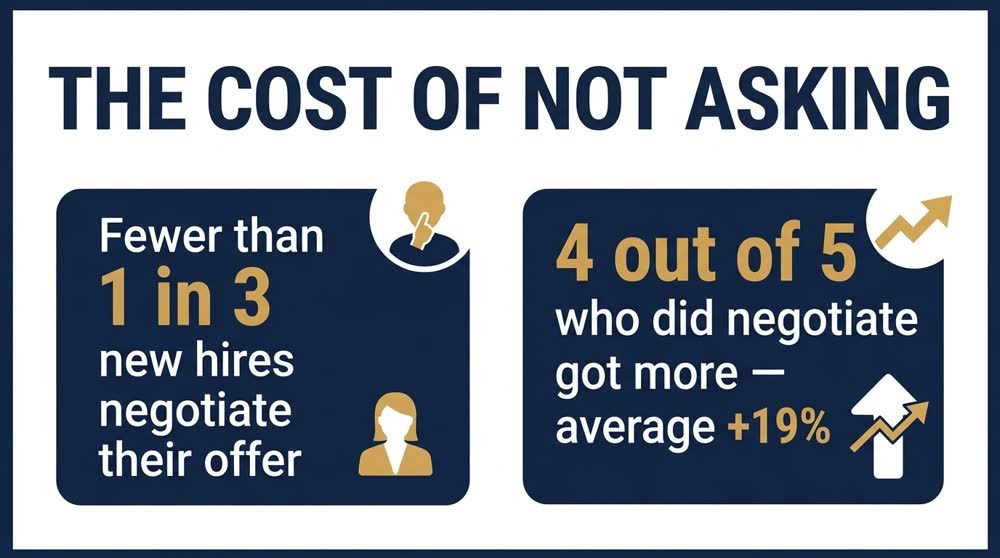
Here's the part that surprised even me: fewer than a third of new hires actually negotiate their most recent offer. Younger professionals negotiate even less: roughly 2 in 5 workers under 35 push back on an offer, compared to a little over half of workers 35 and up.
That hesitation is expensive. Among people who did negotiate, about 4 out of 5 walked away with a better offer, and the average bump was close to 19%, with some far higher. Hiring managers, for their part, mostly expect it: roughly 7 in 10 go into an offer assuming there might be a negotiation conversation, and most of those conversations end in some kind of improvement for the candidate.
Even entry-level offers are more negotiable than people assume: roughly half of employers say they're willing to negotiate at that level too. The single biggest mistake isn't negotiating badly. It's not negotiating at all.