October 3, 2026
How to Give Feedback to an Employee Without It Feeling Personal
Why Feedback Lands Like an Attack
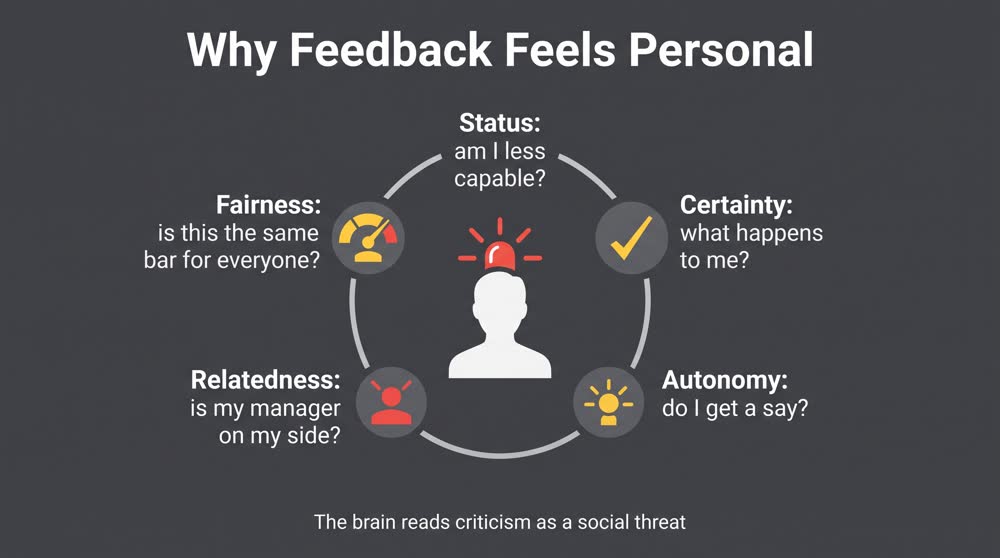
If you are a new manager wondering how to give feedback to an employee without it feeling personal, start with this: the problem is rarely your words. It is what the other person's brain hears underneath them. You say "the report needed more detail." They hear "you are not good enough for this job."
The brain treats social threats a lot like physical ones. A piece of criticism can quietly raise five alarms at once. Am I less capable than I thought (status)? What happens to me now (certainty)? Do I get any say in fixing this (autonomy)? Is my manager still on my side (relatedness)? Is this the same bar everyone else is held to (fairness)? Researchers call this the SCARF model, and it explains why a calm, reasonable comment can get a defensive, emotional reply.
Douglas Stone and Sheila Heen, authors of Thanks for the Feedback, add a useful twist. People reject feedback for three reasons: they think it is wrong, they have an issue with who is giving it, or it clashes with how they see themselves. That last one is the big one. Tell someone who prides themselves on being reliable that they missed a deadline, and you are not just talking about a deadline. You are poking their identity.
So your job is not to make feedback painless. It is to make it clearly about one piece of work, not about who they are.
Describe the Moment, Not the Person
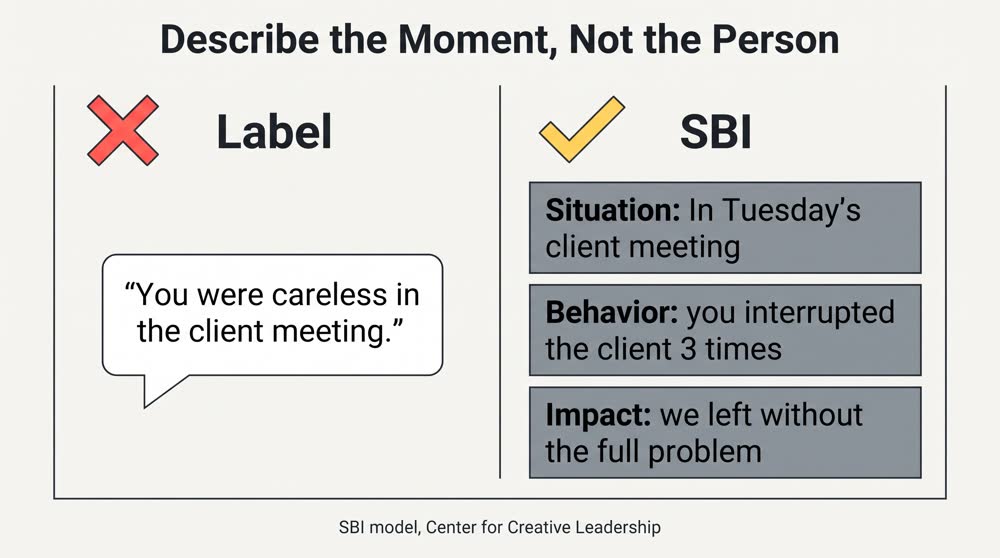
The fastest way to make feedback feel personal is to use a label. "Careless." "Unprofessional." "Not a team player." "Bad attitude." Each one turns a single event into a verdict on someone's character, and now they are arguing about whether the label is fair instead of thinking about what to change.
A simple fix is the SBI model from the Center for Creative Leadership: Situation, Behavior, Impact. Say when and where it happened, what they actually said or did, and what effect it had. Compare "You were careless in the client meeting" with "In Tuesday's client meeting, you interrupted the client three times, and we left without the full picture of their problem." The second one is harder to argue with, and much easier to act on.
Then add one more step: ask about their intent. "What were you hoping to do there?" Maybe they were trying to keep a long meeting on time. You can respect that goal and still be clear about the result. Just ask it after you have described what happened, not before. "Why did you do that?" as an opening line sounds like a cross-examination.
Skip the Sandwich. Say the High Bar Out Loud.
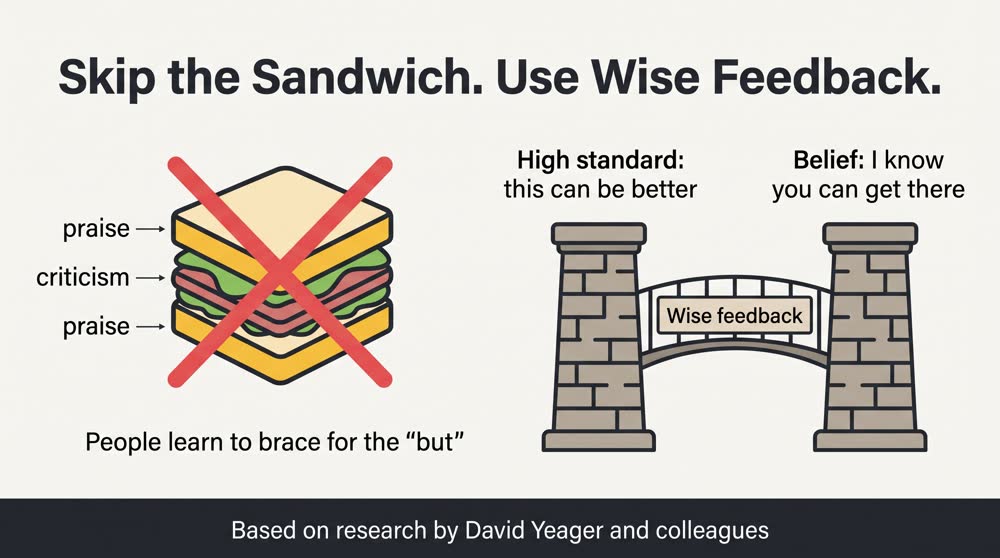
Many new managers are taught the feedback sandwich: praise, criticism, praise. It feels kind. In practice, people quickly learn the pattern, and every compliment you give starts to sound like the warm-up before the "but." The praise loses value and the real message gets blurry.
A better approach comes from research by psychologist David Yeager and colleagues on what they call "wise feedback." In their studies, critical comments landed much better when they carried two messages together: the standard here is high, and I believe you can reach it. Not empty praise. A specific bar, and a genuine vote of confidence.
For a manager, it sounds like this: "This report needs a clearer risk section before it goes to leadership. I am pushing on it because your analysis on the last project was strong, and I know you can bring this one up to that level." The person hears that the bar is real, and that you are raising it because you rate them, not because you have written them off.
Small, Private, and Often
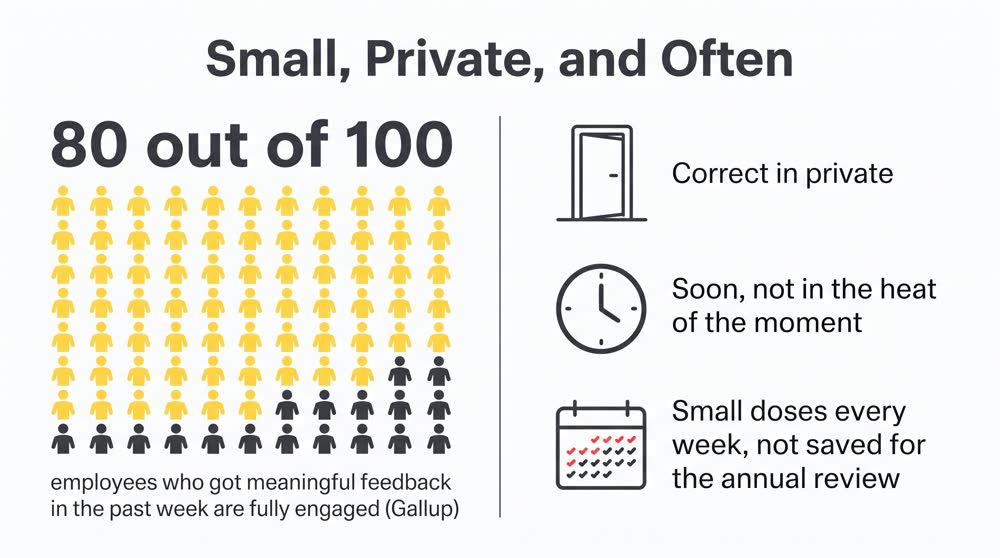
Timing does a lot of the work for you. Gallup found that about 80 out of 100 employees who received meaningful feedback in the past week were fully engaged at work. That does not mean weekly feedback magically fixes engagement, but it does tell you something: feedback feels less like a threat when it is normal, not rare.
When feedback only shows up once a year, or only when something has gone wrong, every "can we talk?" message feels like a summons. When it shows up in small doses every week, including when people do something well, a correction is just another conversation.
Three ground rules help. Correct in private, because public criticism hits status and belonging hard and makes people focus on their embarrassment instead of the lesson. Go soon, but not in the heat of the moment. If either of you is angry, wait a few hours and get your facts straight. And do not save things up. Bringing out three months of examples at once feels like a case file, not coaching.
End With a Plan, Not a Verdict
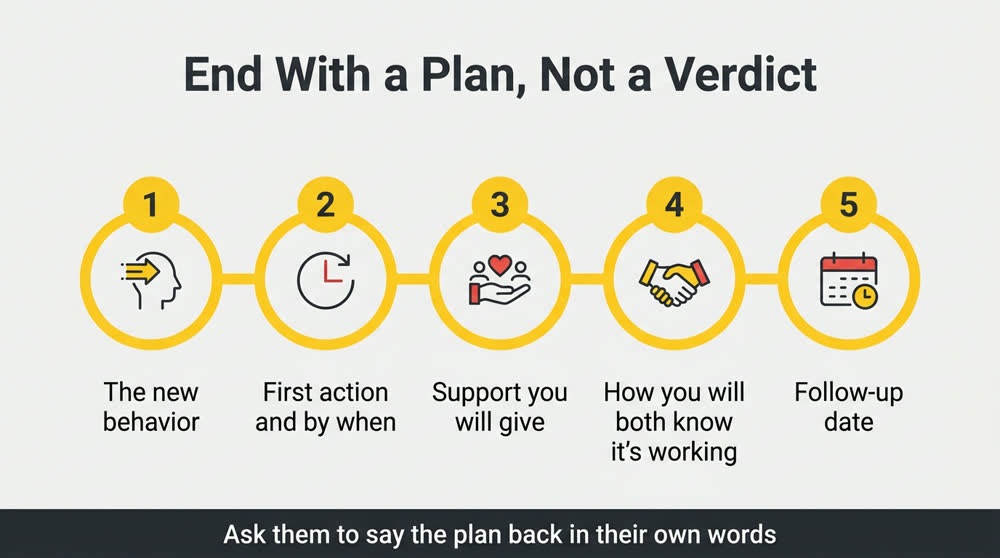
How a feedback conversation ends decides how it is remembered. If it ends on the problem, it feels like a judgment. If it ends on a plan, it feels like help.
Before you finish, agree on five things: the new behavior you want to see, the first action and by when, what support you will give, how you will both know it is working, and when you will check in. Then ask them to say the plan back in their own words. It is not a test. It is the quickest way to catch a misunderstanding before it becomes next month's problem.
Close with something like: "This is about one habit, not about your ability. I am confident you can change it, and I will help." Then actually follow up. A manager who raises an issue and never mentions it again teaches the team that feedback is just noise. A quick check-in, especially one that notices the improvement, is what turns one hard conversation into trust.
If you are stepping into your first management role and want the full playbook for conversations like this one, the First-Time Manager Guide walks you through them step by step.