July 11, 2026
What Hiring Managers Say About You in the Post-Interview Debrief
The interview ends, you leave the room, and that's when the real decision-making begins. Here's what actually happens in the debrief.
The Meeting You Never See
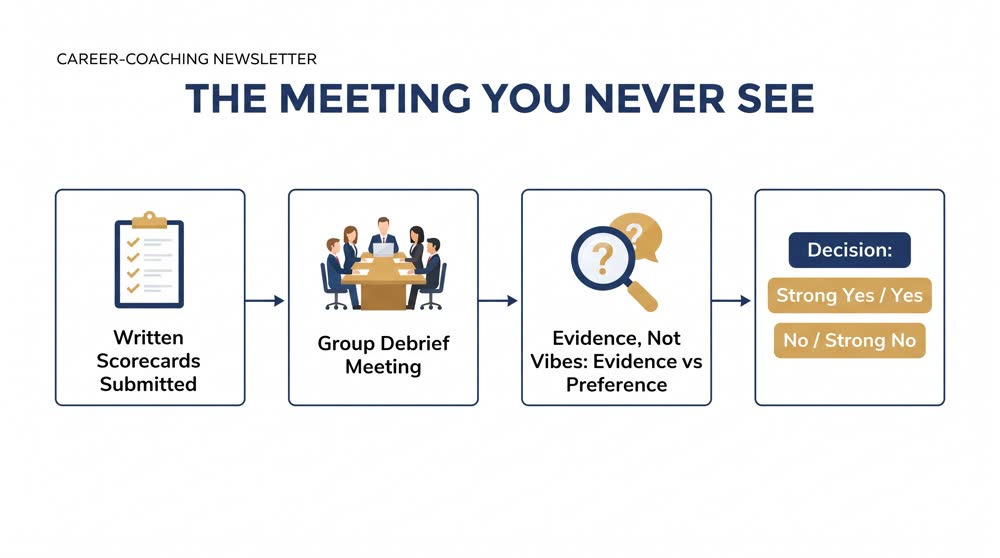
Most people think the interview verdict gets decided mid-answer, the moment your voice cracked, or you nailed a comeback. It doesn't. At most companies with a real hiring process, nothing gets decided until a separate meeting you'll never be in: the debrief.
Here's how it actually runs. Before anyone talks, each interviewer fills out a written scorecard tied to the specific skills the role needs, not a gut-check, a checklist. The hiring manager (or a neutral facilitator) then walks the group through the notes, one theme at a time, pushing on two questions that decide everything: "Is this evidence, or just a feeling?" and "Does anyone have evidence that says otherwise?"
By the end, every candidate gets sorted into one of four buckets, Strong Yes, Yes, No, Strong No, plus a confidence rating. If your strongest moment in the interview never made it onto paper, it doesn't make it into that room either.
Vibes vs. Evidence: The Real Argument in the Room
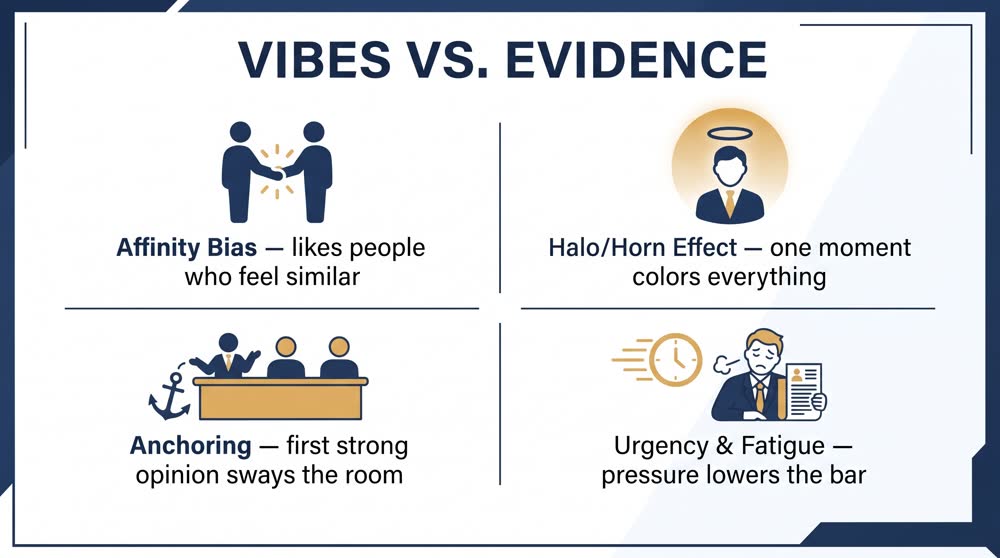
Scorecards exist because, left alone, hiring panels default to shortcuts. The most common one: "I liked them," which sounds like a decision but is really just a vote based on chemistry, not capability.
Four patterns show up over and over. Affinity bias: interviewers unconsciously score people higher who remind them of themselves. The halo/horn effect: one great answer, or one flubbed one, colors every other rating that follows. Anchoring: the first strong opinion in the room, especially from a senior voice, quietly drags everyone else toward it. And urgency/fatigue: when a team is desperate to fill a seat, the bar for "good enough" quietly drops.
A well-run debrief has someone whose whole job is to catch this, asking, out loud, "is this evidence or preference?" A badly-run one doesn't, and the loudest opinion wins.
What Actually Gets Written Down About You
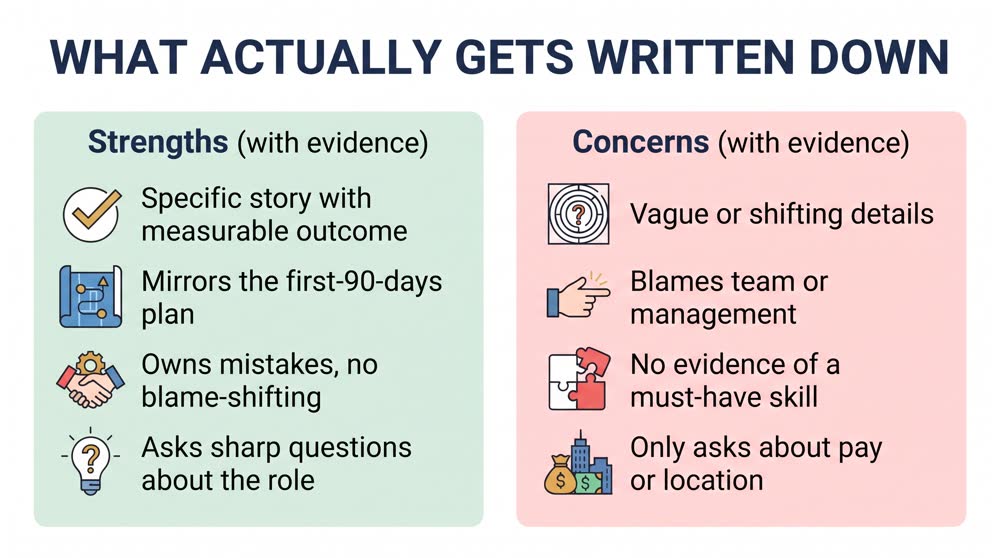
On the "yes" side, three things reliably make it into the notes: a specific story with a number attached ("cut onboarding time 40% in 90 days"), language that mirrors what success in the role actually looks like, and ownership, describing what you did when something went wrong, not just what the team did.
On the "no" side: answers where the details shift depending on which question you're asked, stories that quietly shift blame to "the team" or "leadership," and, this one surprises people, asking only about pay, title, or location at the end, which panels read as a lack of real interest in the actual work.
There's also a quieter category: silence. If a must-have skill for the role never comes up in any of your answers, that's treated as a real gap in the debrief, not a coincidence.
How to Interview for the Debrief, Not Just the Room
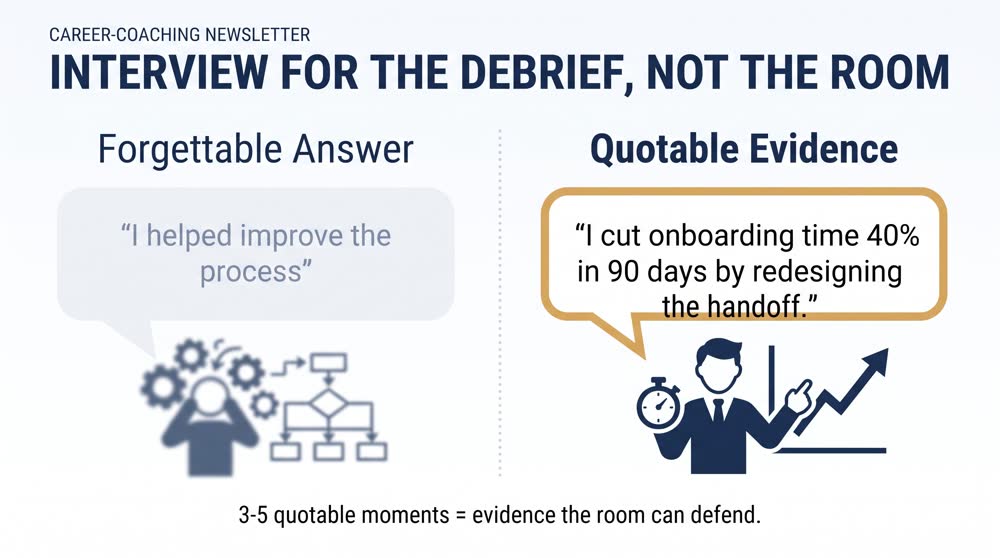
Once you know what actually gets discussed after you leave, the strategy changes. Your job in an interview isn't just to sound good in the moment, it's to hand the panel 3 to 5 specific, quotable moments they can write down and defend later, to people who weren't in the room with you.
Concretely: swap "I helped improve the process" for "I cut onboarding time 40% in 90 days by redesigning the handoff." Mirror the language of what success looks like in the first 90 days, if you can find it in the job posting or ask directly. And close with a question that signals you're thinking about the role, not just the offer.
You're not just answering questions anymore. You're writing the evidence someone else will have to defend on your behalf, in a meeting you'll never see.