July 21, 2026
Why Hiring Managers Check References You Never Gave Them
You picked your references carefully. Three people who know your work, who like you, who you trust to say the right thing. What you probably don't know is that somewhere in the process, the hiring manager may have gone looking for someone else entirely. Someone you never introduced them to, who never agreed to speak on your behalf, and whose opinion of you might matter more than any name on your list.
This isn't a rumor or an edge case. It's written into hiring guidance for 2026 as standard practice. Here's how it actually works, where the legal lines sit, and what you can do about a conversation you'll likely never know happened.
Your Hand-Picked References Are the Least Trusted Part of Your Application

Every name on your reference list is there for the same reason: you know they'll say something good. Hiring managers know it too, and current hiring playbooks now openly coach managers to treat your list as a starting point, not the finish line.
Guidance aimed at hiring managers, including a widely circulated field guide from Bain Capital Ventures, frames this as standard for mid-to-senior hires. After the official references, the manager goes looking for someone you didn't choose: a former manager you left off the list, a coworker mentioned in passing, someone reached through a mutual LinkedIn connection. That person has no reason to only tell the flattering half of your story.
This has moved from a fringe tactic to a documented best practice. Recent hiring guides say it plainly: supplement the candidate's list with people you find yourself. If the story from your chosen references matches what an unlisted contact says, you're in good shape. If it doesn't, that mismatch is the thing that gets noticed.
How They Find People You Never Introduced Them To
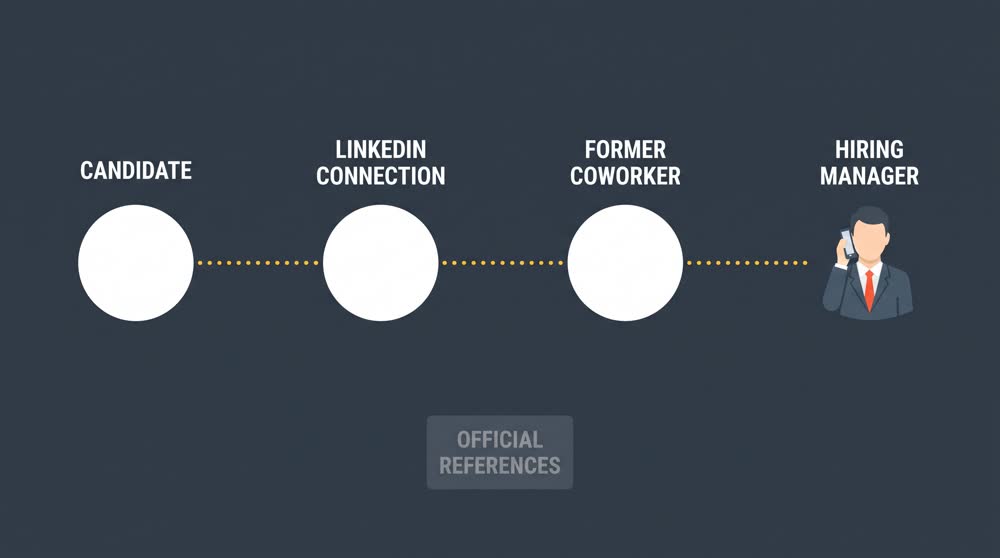
The most common route is LinkedIn. Who you're connected to, who's endorsed you, who currently works at the companies on your resume. A hiring manager doesn't need your permission to scroll that list and message someone who worked alongside you.
The other route is even more direct: their own network. Recruiters and hiring managers openly acknowledge that most industries are small, tight circles. The person they end up calling is often someone they already trust professionally, who happens to have crossed paths with you two jobs ago.
The pattern worth remembering: it's rarely a random stranger doing the digging. It's usually someone who already has the hiring manager's ear, cross-checking your reputation against people who know you but never agreed to vouch for you.
Where the Legal Line Actually Sits
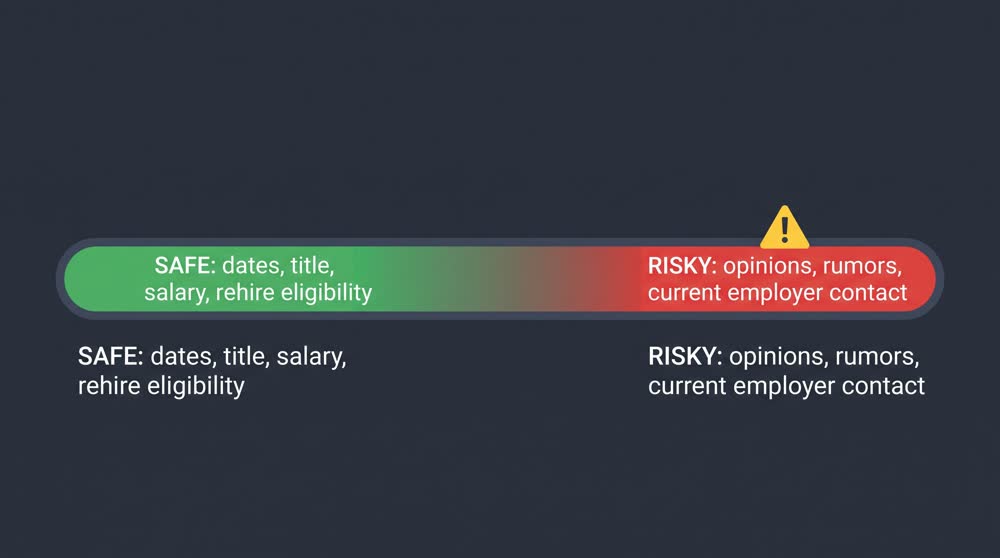
These calls are generally legal, but only within a narrow lane: dates of employment, job title, salary, and whether you're eligible for rehire. That's the same information a formal HR reference check is limited to, and it's the safe zone for whoever picks up the phone.
The line gets crossed when the conversation drifts into opinions, rumors, or anything touching a protected characteristic. That's where both the hiring manager and the person answering can be exposed to defamation or discrimination claims, and careful companies train their people to stick to facts and stop there.
One line almost nobody crosses on purpose: contacting your current employer without your permission. Hiring guidance treats this as close to untouchable, because it can put your current job at risk before you've even accepted a new one. If a recruiter ever asks to do this, it's completely fair to say no.
How to Get Ahead of a Call You'll Never Be Invited To
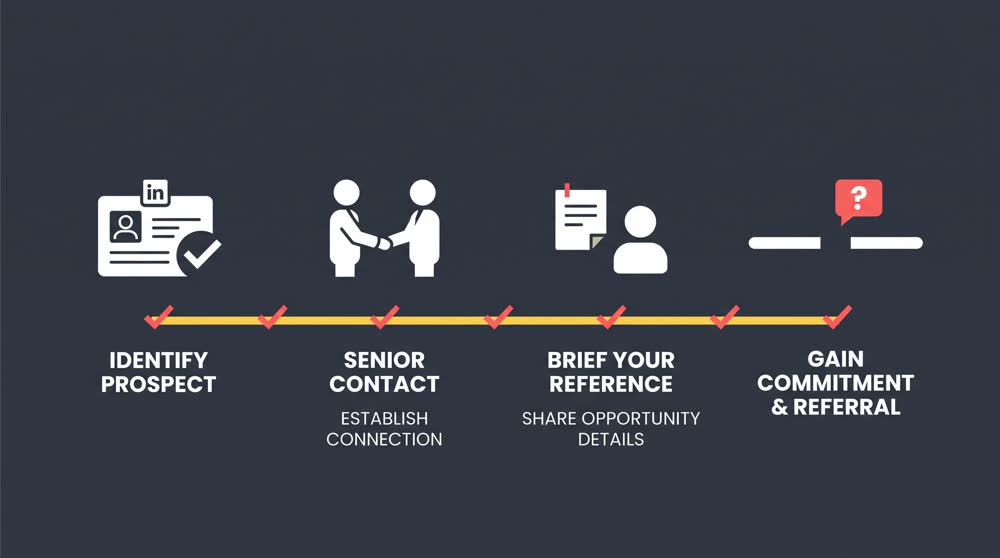
Start with what's public. Your LinkedIn is the first place anyone looks before they pick up the phone. Keep your titles and dates consistent with your resume, and don't let it go stale while you're actively job hunting.
The bigger, longer-term move: build one real relationship at every job you hold, with someone senior enough that they'd speak well of you years later if a stranger called out of nowhere. That relationship is worth more than any formal reference list, because it's the one a hiring manager is most likely to stumble into on their own.
Brief your official references the way you'd brief a coworker before they present on your behalf: remind them what role you're interviewing for and what story you want the conversation to reinforce. And if a past manager relationship ended badly, get ahead of it. Mention it before it becomes a mismatch someone else notices for you.
One more tell worth knowing: if a recruiter suddenly goes quiet or starts saying things like "we're still finalizing the package" right after your references were due, that hesitation is sometimes a sign a call came back mixed. Asking directly, "is there anything from the reference conversations I can address?", is a reasonable question to ask back.
The references you submit are only half the picture. The other half is a reputation you've been building all along, whether you knew someone was checking or not.